Peer-led Community Care
Contact Us: info@qhrs.org
What is harm reduction
Harm reduction isn’t just about making substance use safer, it’s a framework that views community care and survival strategies through the lens of social justice and bodily autonomy. It goes beyond standard public health models by actively working to dismantle structural oppressions—such as racism, capitalism, and policing—that create the root conditions of harm. Liberational harm reduction centers absolute self-determination. It honors a person's individual choices regarding their body, health, and survival methods without judgment or coercion. It also rejects the idea that sobriety is the highest form of healing or a prerequisite for receiving care, respect, and support. Further, it explicitly names and fights white supremacy, patriarchy, ableism, and state surveillance as primary sources of systemic harm and focuses on community resilience, abundance, and love rather than forcing behavioral conformity.
https://www.yesmagazine.org/health-happiness/2023/01/19/harm-reduction
Why we’re peer led
Centering peers in harm reduction means placing people with lived and living experience of substance use at the core of program design, decision-making, and service delivery. This approach ensures that services actively build trust, reduce stigma, and honor individual autonomy rather than imposing top-down mandates.
Our mandate
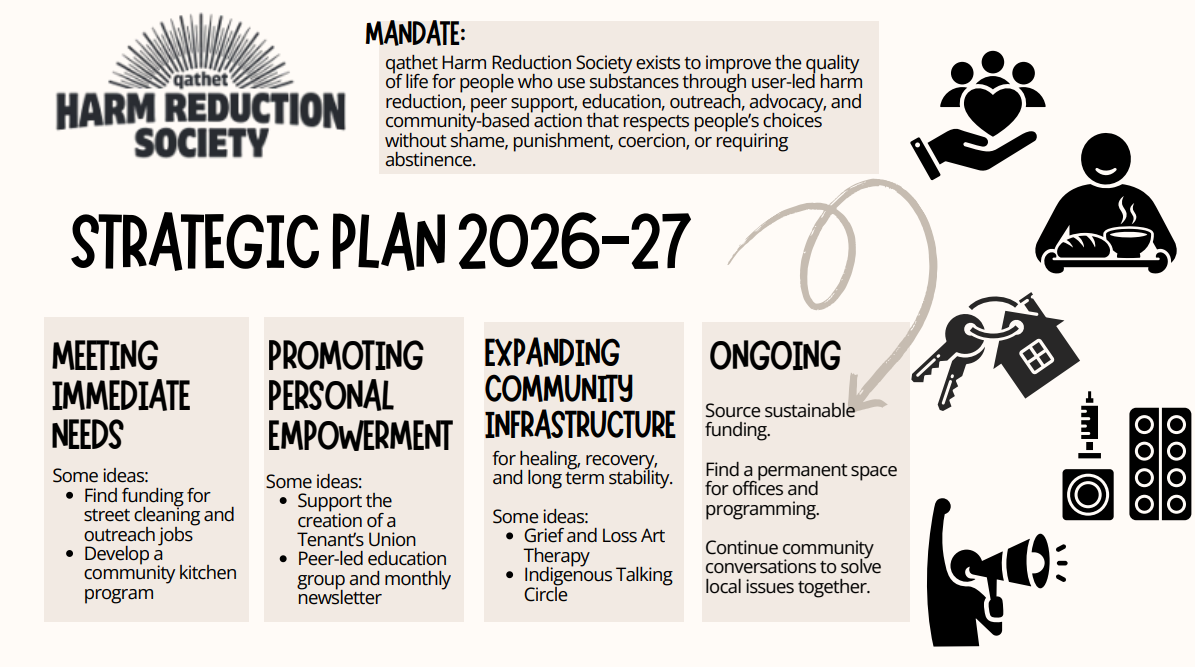
qathet Harm Reduction Society exists to improve the quality of life for people who use substances through user-led harm reduction, peer support, education, outreach, advocacy, and community-based action that respects people’s choices without shame, punishment, coercion, or requiring abstinence
Our mission
qHRS works with people who use substances, their families, and relevant associations and agencies to build informed, empowered networks, develop user-defined harm reduction strategies, support positive public images of people who use drugs, and influence the systems, services, policies, and practices that affect our communities.
Our values
• Autonomy and self-determination: People are experts in their own lives and have the right to make decisions about their bodies, relationships, care, substance use, safety, and support.
• Peer leadership and lived experience: People who use substances must have meaningful roles in education, outreach, training, advocacy, policy, and program development.
• Dignity, privacy, and consent: People deserve respectful services, confidentiality, informed consent, and control over their personal information and stories.
• Non-carceral community care: qHRS prioritizes de-escalation, repair, peer support, safety planning, referrals, restorative approaches, and community-based solutions.
• Anti-stigma and public education: qHRS keeps informed and informs the public about the social, economic, health, treatment, and policy issues affecting people who use illicit drugs.
• Coalition and partnership: qHRS works independently and in partnership with individuals, agencies, associations, and user groups to strengthen local networks and improve public policy.
• Accountability and transparency: qHRS aims to develop policies and procedures that keep us accountable to the society, the membership, and the wider community. qHRS welcomes all feedback and will respond with honesty and openness. See the qHRS policy and procedures manual for more information
We need your support
The qathet region, including the city of Powell River, continues to face the overlapping crises of a toxic drug supply, rising costs of living, homelessness, and inadequate mental health supports. Local non-profits, peer advocacy groups, and service providers have done important work to increase access to housing, healthcare, and harm reduction, contributing to fewer toxic drug fatalities. Still, services have not kept pace with need, and misunderstanding about harm reduction has led some to blame these supports for an increase of visible homelessness, substance use, and petty crime.
Recent misinformation has deepened stigma and pushed governments away from evidence-based solutions advocated by people with lived experience and health care workers. Instead, the conversation has shifted toward involuntary treatment and recriminalization. Approaches that are well documented to increase harm and fail to address the root causes of addiction.
In response to this widening gap between need and resources, we formed the qathet Harm Reduction Society: a grassroots nonprofit comprised of current and former substance users who care deeply about each other and the wider community. Our mission is to promote the health, dignity, and safety of people who use substances by ensuring that the voices of those with lived experience guide the expansion of harm reduction and recovery services in qathet.
We recognize that poverty, racism, criminalization, social isolation, homelessness, trauma, mental illness, and the toxic street supply created by prohibition all increase vulnerability to substance-related harms. These harms are not consequences of personal or moral failings; they are the result of systems and policies that too often fail the people most in need of care.
qHRS aims to create the low-barrier, community-based programming needed to empower, educate, and strengthen people who use substances while building long-term safety, healing, and stability. These initiatives will improve the safety and quality of life of everyone living in qathet by reducing survival based petty crime, open substance use, and public disorder, including unsafely discarded paraphernalia and messes from encampments.
Please donate to our Go Fund Me, if you have the means, to help qHRS start this important work. The more community support we have, the more successful we will be!
You can also direct the proceeds from your returnable cans and bottles to qHRS at the Duncan St Bottle Depot: Account # 2377.
Please note: you must sort your own empties to donate. For large quantities, send us an email to arrange pick-up.
Board of Directors
Dan Snell
PRESIDENT
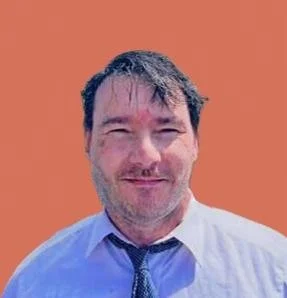
Daniel Snell has been involved in several peer-led community initiatives in Powell River over the last decade. He helped co-found SUSTAIN (Substance Users Society Teaching Advocacy Instead of Neglect), a program focused on harm reduction, peer support, and community resilience. His interests span psychology, personal development, situational awareness, esoteric philosophy, and discovering practical ways to help people live more meaningful and empowered lives.

Steve Fletcher
CO-TREASURER
Steve Fletcher brings lived experience, commitment, and a strong desire to support others through the work of the qathet Harm Reduction Society. After his own experiences with treatment, Steve is motivated to help reduce stigma, build community connections, and support outreach, fundraising, and practical programs that meet people’s basic needs. He is focused on helping establish a strong foundation for the organization by listening to community input, seeking funding, and working toward long-term supports around food, finances, future planning, and shelter.

Dave Marthaller
VICE PRESIDENT
Dave has lived most of his life, since the age eleven, unhoused. He has navigated decades of hardship while serving as a mentor and guide to fellow unhoused community members. He dedicates his days to teaching others vital survival skills, such as constructing sturdy shelters, finding safe encampments, and accessing essential food and support resources. Dave hopes to continue to inspire people and, in his words, “help pick them up and shine their armour” so that they can live a better life on their own terms.

Cait Schneider
CO-SECRETARY
With profound lived experience navigating both active substance use and life on the other side, Cait is a fierce advocate for honest, zero-stigma harm reduction. As a proud Inuit community member, she leverages her deep local connections to advocate for the people she knows and cares about, bringing a grounded, boundary-focused approach to community care. Cait is driven by a vital mission: ensuring kids feel safe enough to talk openly with their parents about substances, preventing the tragic loss of life caused by fear and silence. She believes that true community healing requires radical honesty, practical support, and looking out for one another as a whole. Cait is here to help spark the change—and the grassroots revolution—that the qathet region needs to thrive.

Jasmine Brown
CO-TREASURER
Jasmine Brown has a background in nursing and applied sciences. She brings a thoughtful, wellness-centred approach to harm reduction that prioritizes autonomy, dignity, and community education. Jasmine advocates through local qCAT, PAC, and ACCEPT meetings, and in her leisure time enjoys rock hounding, steam-punk art, and studying the paranormal.
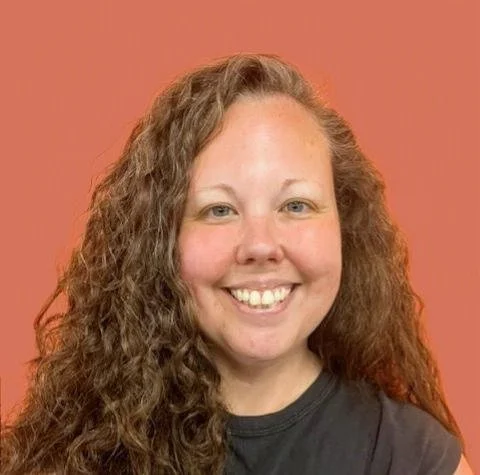
Michelle Wishart
CO-SECRETARY
Michelle Wishart has worked in frontline community harm reduction since 2009. Her experience spans low-barrier housing, supervised consumption services, women’s recovery housing, public health initiatives, managed alcohol programming, Indigenous wellness, and peer-led advocacy and employment. Since moving to qathet in 2023, Michelle has continued building relationships through local harm reduction and homeless services, while enjoying gardening and exploring the back roads and lakes with her dog.
The Evidence
Links to studies, articles, and videos that support the mandate and mission of qHRS.
-
How poverty generates crime and what the solutions should be
Poverty prevention is crime prevention
Substance Use Disorder is a disability
https://www.ohrc.on.ca/tl/node/2861
Disability supports in Canada fall short
-
Housing First programs have better outcomes than treatment in reducing homelessness
https://www.camh.ca/en/camh-news-and-stories/camh-and-st-michael-study-on-homelessness
New research confirms that housing first works and treatment first does not - 2026
https://homelesshub.ca/blog/2026/housing-first-works/
The connection between homelessness and substance use
https://homelesshub.ca/collection/homelessness-101/substance-use-addiction/
Cost analysis of housing first
-
Involuntary Treatment evidence brief
https://www.ccsa.ca/sites/default/files/2025-02/Involuntary-Treatment-Evidence-Brief-en.pdf
Peer-led and informed programming aid success in treatment and recovery programming and medication assisted therapy for OUD
Barriers to successful treatment for substance use disorder
https://pmc.ncbi.nlm.nih.gov/articles/PMC9434658/
Community based care over institutionalized care
Involuntary treatment is criminalization
https://www.pivotlegal.org/involuntary_treatment_criminalization_by_another_name
-
Our government is ignoring the experts
https://www.cbc.ca/news/canada/opioid-overdose-crisis-street-drug-government-funding-9.6976562
Vancouver program that prescribes fentanyl
https://filtermag.org/safe-supply-phs-vancouver-prescription-fentanyl/
How prescription heroin is saving lives
https://www.bccsu.ca/blog/news/how-prescription-heroin-is-saving-lives/
Safe Supply did not “flood the streets with drugs”
https://www.bccsu.ca/blog/news/bc-governments-crackdown-on-safe-supply-spreads-fear/
Cost effectiveness of harm reduction
https://hri.global/wp-content/uploads/2020/04/COST_EFFECTIVENESS_BRIEFING-APRIL-2020-ENG.pdf
Harm reduction services do not lead to increased crime in communities
Supervised injection sites have good outcomes
https://pmc.ncbi.nlm.nih.gov/articles/PMC5685449/
Safe Supply: Scaled Up Too Quickly and Was Ended Too Quickly - 2026
https://jamanetwork.com/journals/jama-health-forum/fullarticle/2848523
The Evolving Illicit Drug Market and Polysubstance Use Need to Be Considered
https://www.sciencedirect.com/science/article/pii/S0376871626002553
Autonomy Has to be Respected When Offering Safe Supply and OAT
-
The Iron Law of Prohibition
https://filtermag.org/infographic-the-iron-law-of-prohibition/
The War on Drugs creates more crime and enriches criminals
https://drugpolicy.ca/count-the-cost-report-the-war-on-drugs-creating-crime-enriching-criminals/
Decriminalization was the right move, but it was done wrong
https://drugpolicy.ca/bc-revives-criminalization/
Incarceration Does Not Lead to Sustained Abstinence
https://pmc.ncbi.nlm.nih.gov/articles/PMC6381679/
Prevention and Health Care Work Better than Law Enforcement
-
Promoting stigma as prevention is not good public health policy
https://drugpolicy.ca/the-impact-of-stigma-and-avoiding-stigmatizing-language/
Stigma is a Barrier to Treatment and Recovery
https://pmc.ncbi.nlm.nih.gov/articles/PMC10867215/
BC Coroner’s Report – November 2023
BC Office of the Human Rights Commissioner Statement – November 2025
https://bchumanrights.ca/resources/publications/publication/toxic-drug-crisis/
-
Short documentary of a peer led drop-in centre in the DTES
Impacts of peer-led advocacy
https://www.tandfonline.com/doi/full/10.3109/14659891.2013.775608
Tackling the toxic drug crisis with the power of community
https://www.ccsa.ca/en/harnessing-power-community-tackle-toxic-drug-crisis
Peer-led Initiatives Can Increase Success of Harm Reduction Services
https://www.sciencedirect.com/science/article/pii/S0955395924002986
A.I. Statement:
qHRS may use A.I. tools for editing and summarizing purposes, but does not use generative A.I. for any purpose.
Land Acknowledgment:
We respectfully acknowledge that we are operate on the traditional and treaty territory of the ɬaʔamɩn (Tla'amin) Nation.